



Progressive Web Apps (PWA) Development
 Emma Rodriguez / 5 min
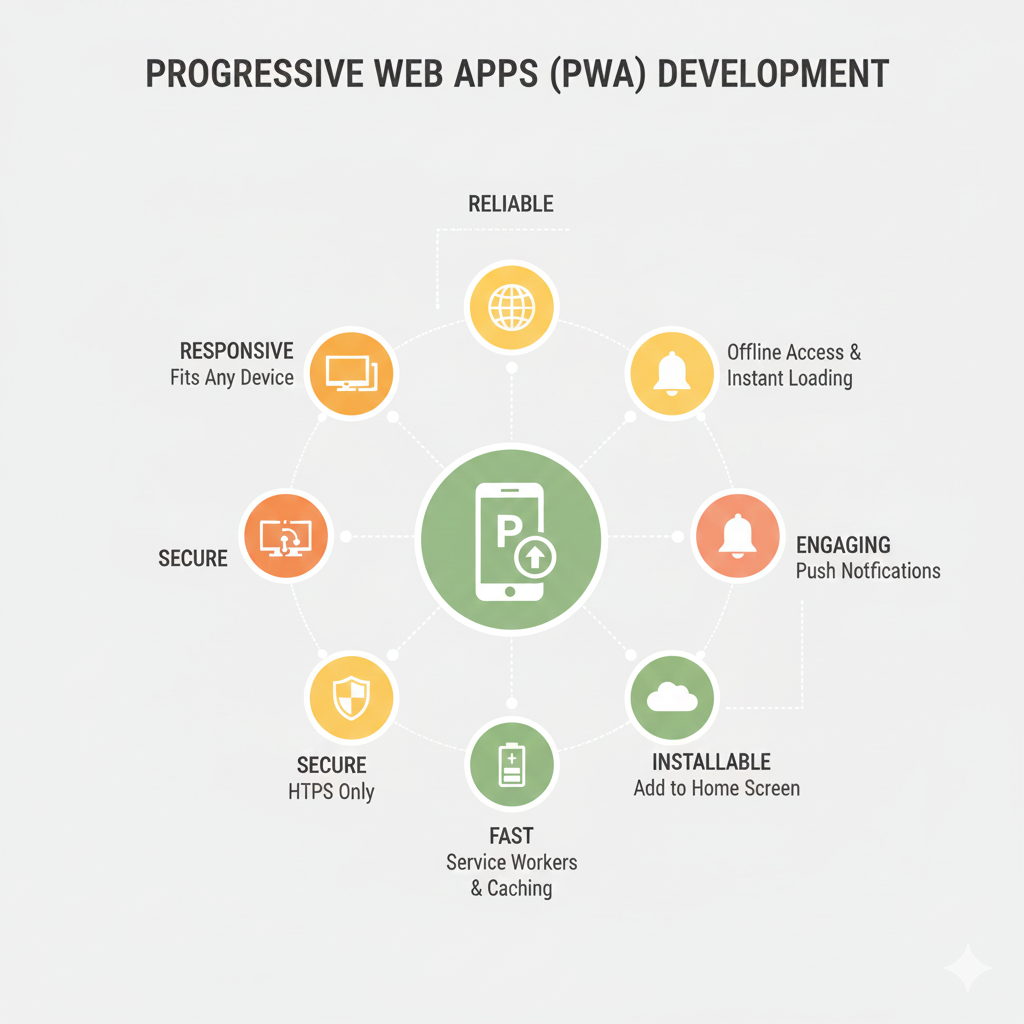
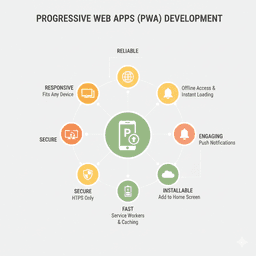
Progressive Web Apps represent the evolution of web technology, combining the best aspects of web and mobile applications. PWAs provide app-like experiences directly through web browsers, offering offline functionality, push notifications, and device integration without requiring app store distribution. In 2025, PWAs have become a preferred solution for businesses seeking to reach users across multiple platforms while maintaining a single codebase.
PWA Architecture
Progressive Web Apps utilize service workers to provide offline functionality and background processing capabilities. These JavaScript files intercept network requests, cache resources, and enable offline experiences that rival native applications. The architecture includes manifest files that define app metadata and enable installation on user devices.
Performance optimization is crucial for PWA success, with techniques like code splitting, lazy loading, and efficient caching strategies ensuring fast loading times and smooth interactions. These optimizations are essential for providing the responsive experience users expect from modern applications.
Cross-Platform Benefits
PWAs provide significant cost advantages by allowing businesses to maintain a single codebase instead of developing separate native applications for iOS and Android. This approach reduces development time and maintenance overhead while ensuring consistent user experiences across platforms.
The ability to update PWAs instantly without requiring app store approval processes provides faster deployment of new features and bug fixes. This agility enables businesses to respond quickly to market changes and user feedback.





Related posts
Software Applications Development

Software Applications Development
Cloud-Native Development Practices
Software Applications Development