




Computer Vision in Modern Applications
 Dr. Lisa Park / 5 min
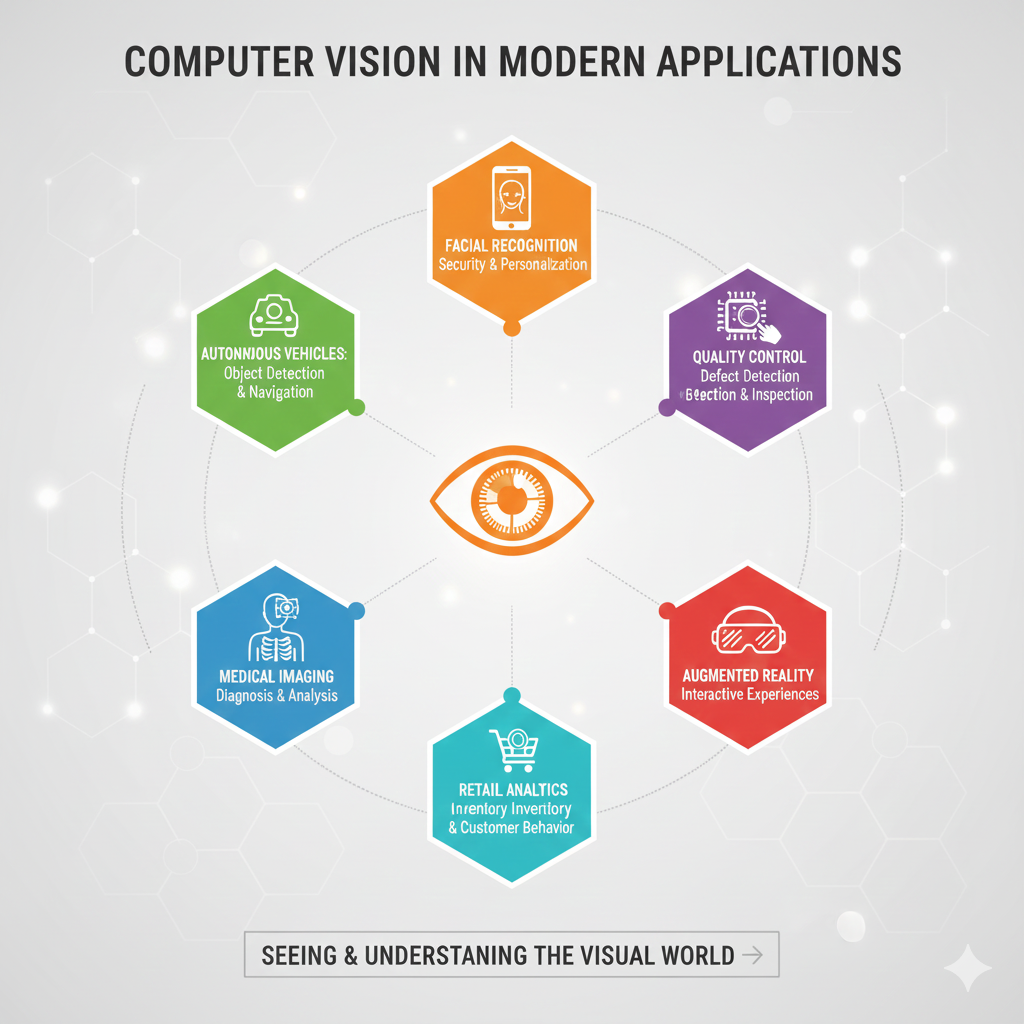
Computer vision technology has reached new heights in 2025, enabling machines to interpret and understand visual information with accuracy that often exceeds human capabilities. From autonomous vehicles to medical imaging, computer vision applications are transforming industries by providing automated visual analysis, quality control, and safety monitoring. The integration of deep learning algorithms has made computer vision more accessible and powerful than ever before.
Quality Control and Inspection
Manufacturing industries utilize computer vision for automated quality control, detecting defects and irregularities in products with microscopic precision. These systems operate continuously, identifying issues that human inspectors might miss and ensuring consistent product quality. The technology reduces waste, improves efficiency, and maintains safety standards across production lines.
Retail applications include automated checkout systems, inventory management through visual recognition, and loss prevention. Computer vision systems monitor store activity, track inventory levels, and identify suspicious behavior without requiring human intervention.
Medical Imaging and Diagnostics
Healthcare applications of computer vision include diagnostic imaging analysis, surgical assistance, and patient monitoring. AI systems can detect anomalies in X-rays, MRIs, and CT scans with remarkable accuracy, assisting doctors in making faster and more accurate diagnoses. These tools help identify conditions like cancer, fractures, and neurological disorders at early stages.
Surgical robots equipped with computer vision provide enhanced precision during complex procedures. The technology enables minimally invasive surgeries with improved outcomes and faster recovery times for patients.




Related posts
Artificial Intelligence
Artificial Intelligence
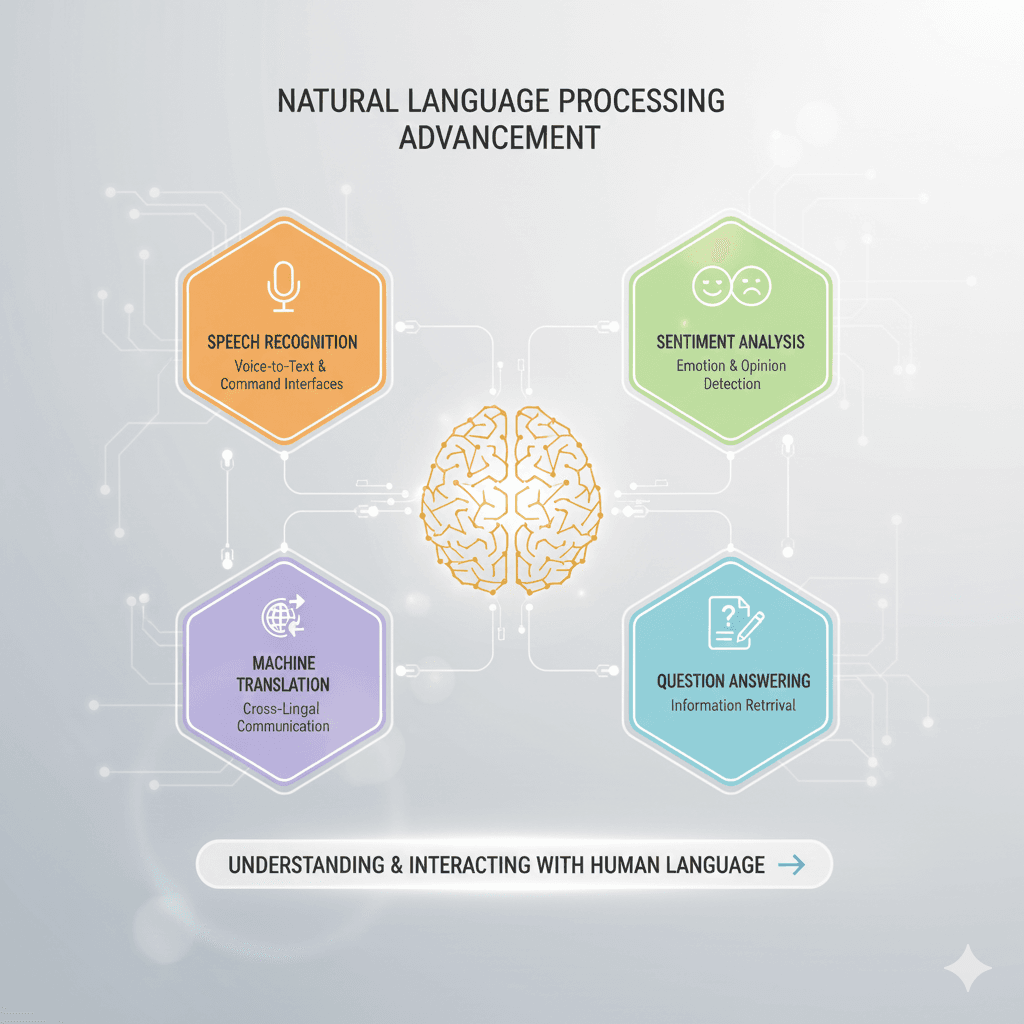
Natural Language Processing Advancements
Artificial Intelligence